Why OEMs & EMS prefer Information Distributors
Greater information leverage means higher revenues for open market electronics distributors. The OEMs, EMS companies, and distributors that share information more effectively build more robust supply chains.
The electronics supply chain runs on information. Every shortage, every excess, every cost saving traces back to one thing: who knew what, and when.
When a shortage hits, the speed at which manufacturers, EMS providers, and their distribution partners can locate available inventory determines whether a production line keeps running or goes dark. When excess builds up, the ability to match that surplus to demand across a network is what turns dead inventory into recovered capital. These are not logistics problems. They are information problems.
The OEMs, EMS companies, and distributors that share information more effectively with each other build more robust supply chains. It sounds obvious, but the reality across most of the electronics industry is that this information still moves through emails, spreadsheets, and portal logins that nobody wants to maintain. The result is slow response times, missed opportunities, and relationships that stay transactional when they should be strategic.
Consider what changes when information flows freely across the network. Shortages get flagged earlier because availability data is shared in real time, not after three rounds of emails. Excess inventory gets matched faster because demand signals are visible across organizations, not trapped inside one company's ERP. Cost savings materialize because all parties can make better decisions with better data, not because someone negotiated harder.
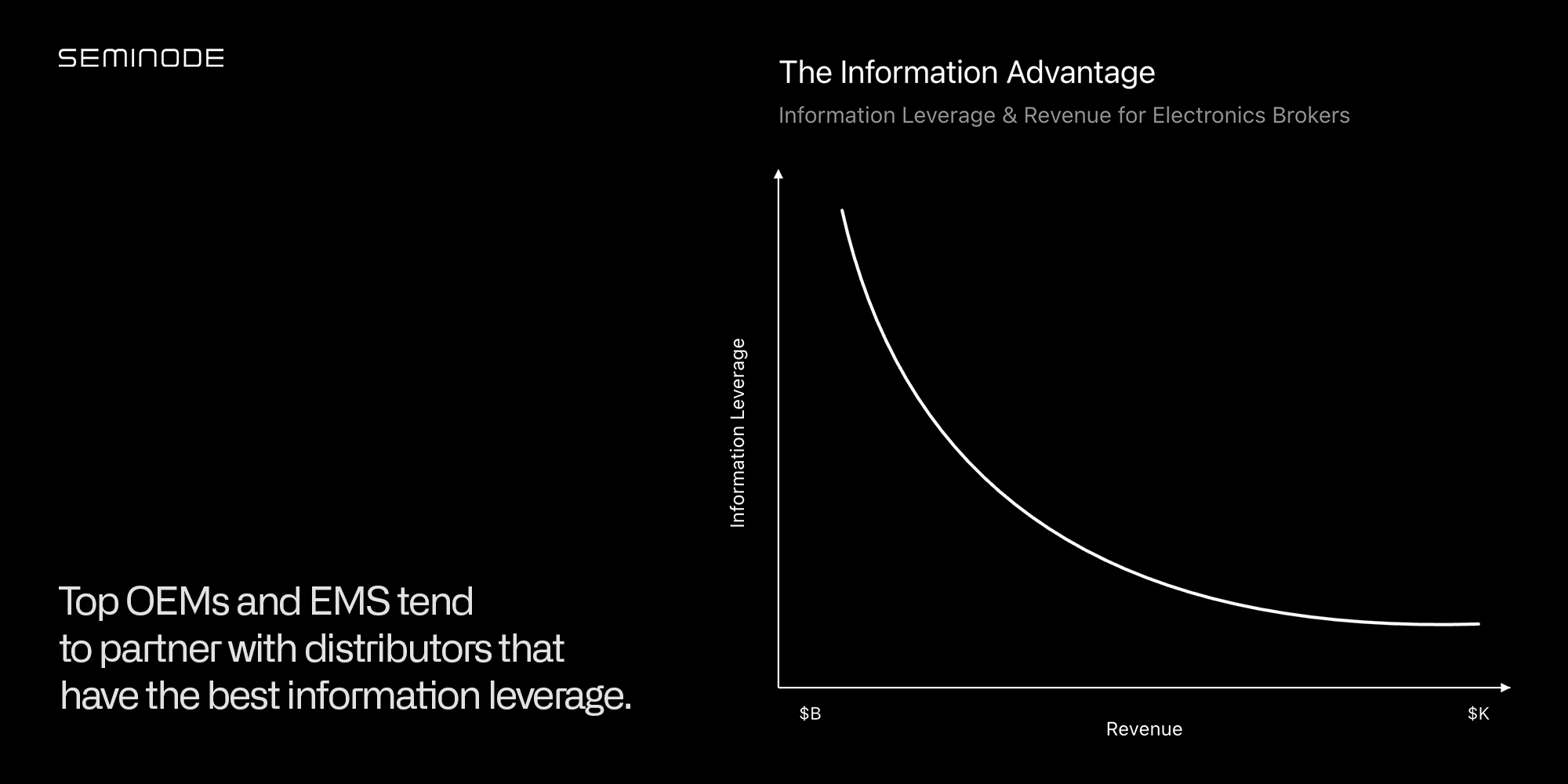
Greater information leverage means higher revenues for open market electronics distributors.
This is the distinction between an independent distributor and an information distributor. Independent distributors move parts. Information distributors move data about parts, and the parts follow. High information leverage is not an advantage for just one side of the table. It drives success for OEMs who need supply continuity, EMS companies who need to keep lines running on tight margins, and independent distributors who build deeper partnerships by being indispensable to both.
Greater information leverage across the supply chain is not a nice to have. It is the foundation that holds up when things go sideways.
Get the next one in your feed
Industry analysis on electronics supply chains, procurement, and the infrastructure behind global trade. New posts delivered through LinkedIn.