

The "Amazon for Electronics Components" Will Never Work
The marketplace model keeps failing. Here's why.
Every few years, a well-funded business announces it will become the Amazon of electronic components. The pitch is always the same: aggregate supply, add a slick UI, and let the marketplace do the rest.
It never works. Here's why.
Amazon works because books, shoes, and batteries are commodities. The buying decision is simple. The relationship between buyer and seller is irrelevant.
Some electronic components are commodities too. Standard passives, common connectors. A marketplace can handle those fine. But the hard problems in procurement aren't about finding a 10K resistor. They're about securing allocation on a constrained FPGA, verifying traceability on a specialty IC, or getting a trusted supplier to prioritize your order during a shortage. That's where marketplaces break down.
The Incentive Problem
The other problem is incentives.
Manufacturers won't commoditize their sourcing networks. They've spent years building preferred supplier lists, negotiating allocation priority, and earning quality guarantees that a marketplace can't replicate.
Suppliers won't play along either. They won't surrender pricing visibility or expose inventory to competitors on a shared platform. No one in this chain has margins generous enough to hand a cut to a new middleman.
Why the Status Quo Persists
So the marketplace model keeps failing, and the industry keeps running on email and spreadsheets. Not because companies are unsophisticated. Because no marketplace has ever offered them a reason to change that doesn't require giving something up.
The Right Question
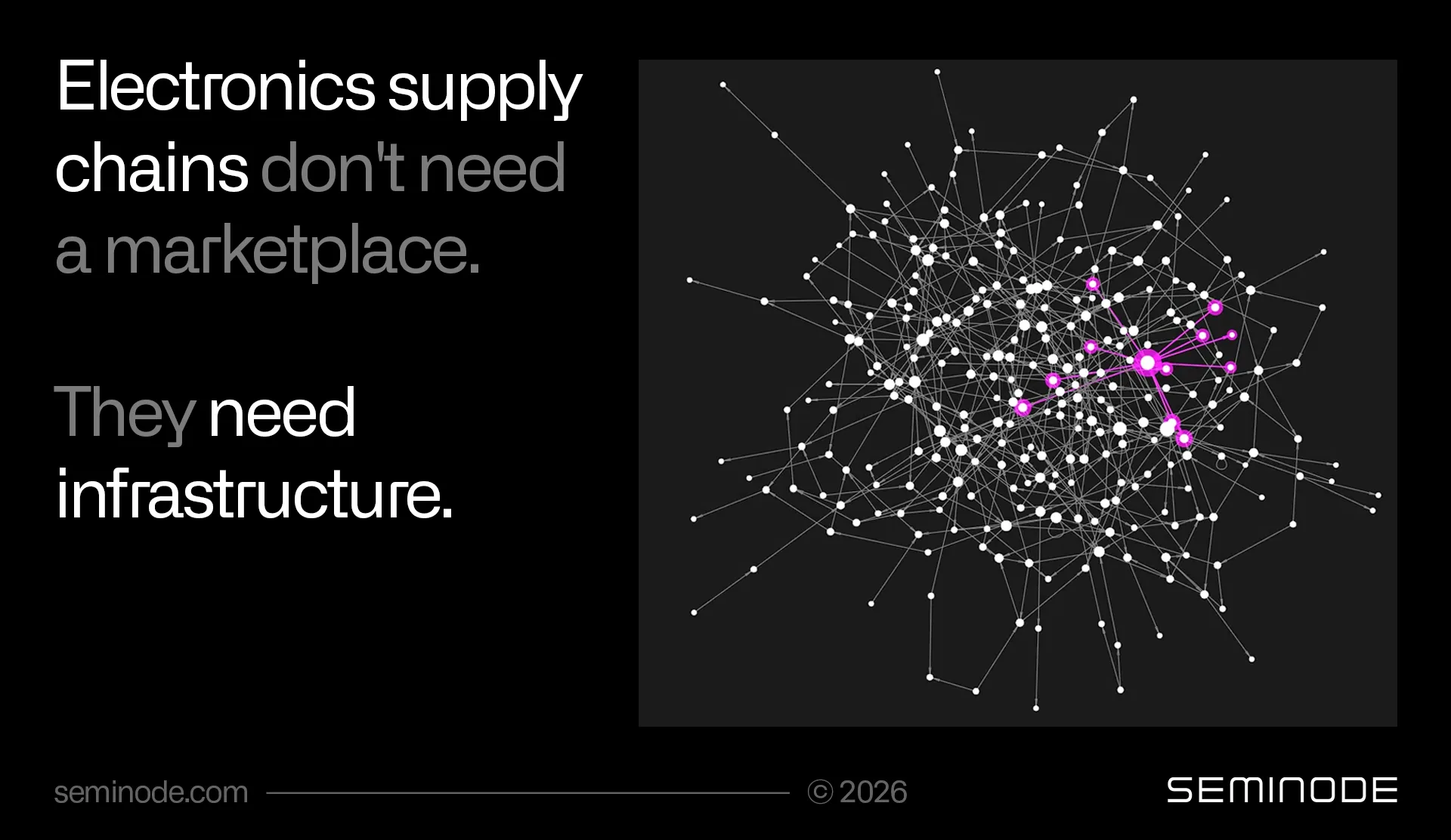
The “Amazon of components” was always the wrong question. The right model for this industry looks nothing like a marketplace. It looks like infrastructure. Rails that let every participant keep their data, their relationships, and their margins.
Get the next one in your feed
Industry analysis on electronics supply chains, procurement, and the infrastructure behind global trade. New posts delivered through LinkedIn.